Discover Greece tours: guided cultural trips, island-hopping adventures, and mainland exploration. Find your perfect itinerary with expert tips.
Stepping onto Greek soil changes your sense of time. One moment you stand below the Parthenon, tracing columns built about 2,500 years ago. The next, you sip a cold freddo espresso at a harbor café while fishing boats knock softly against the dock.
We have felt that shift on dozens of trips through the mainland and islands. Our founder, Yannis Divramis, was born on Milos and grew up between Santorini and Athens. He has spent a lifetime exploring this whole country, from the oracle ruins at Delphi to the turquoise coves of Lefkada.
Greece tours in 2026 offer more variety than ever. You can pick guided cultural trips, island-hopping journeys or small-group walking adventures. Cruise-based Greece tours can also link the Aegean’s greatest hits in a single trip. With so many options, choosing the right experience matters.
This guide covers the types of Greece tours on offer and the places you should not skip. We also explain what to expect on a guided trip and how to pick an itinerary that fits your style. Let’s get into it. For more ideas, explore Tours In Greece.
Why Greece Remains One of the World’s Most Rewarding Destinations
We get asked this all the time. With so many places to visit in Europe, why does Greece keep pulling people back? Honestly, no other country packs this much into one trip.
Start with the history, since Greece is the cradle of Western civilization. Democracy, philosophy, theater and the Olympic Games all began here. The Acropolis in Athens is more than a UNESCO site. It is the physical base of ideas that still shape our world.
Then there are Olympia, Mycenae, Delphi and Epidaurus. On Greece tours, each one is a living textbook you can walk through.
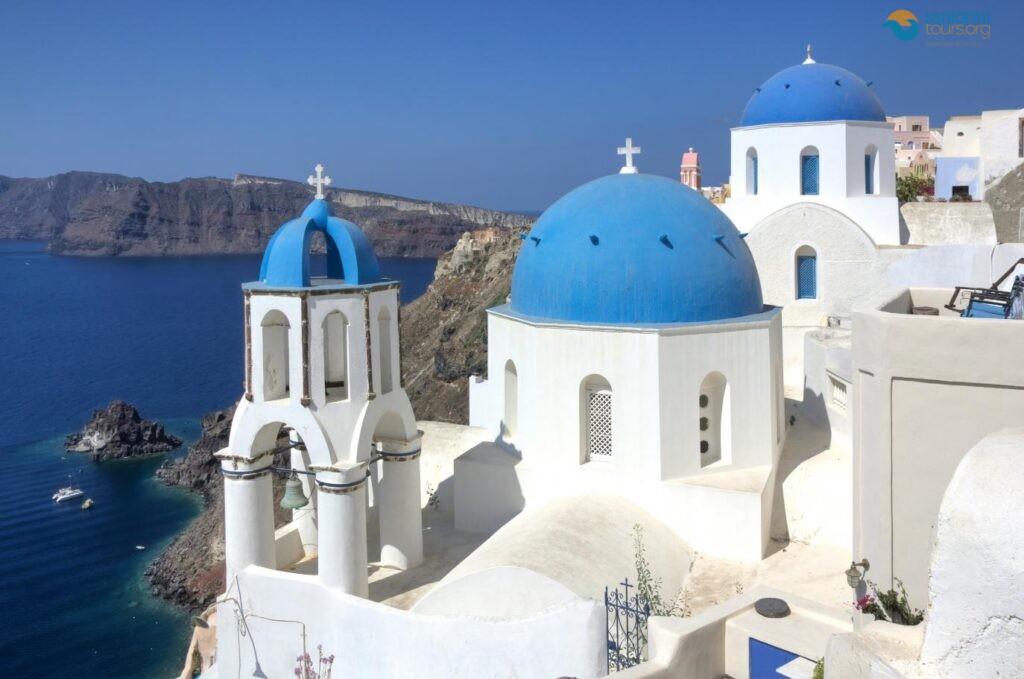
But Greece is not a museum, which surprises first-timers most. The whitewashed villages of the Cyclades feel truly alive. Bougainvillea spills over blue-domed churches, and locals grill octopus on the waterfront.
The food alone is reason enough to book a flight. Think fresh feta, grilled lamb and olive oil pressed from trees older than some countries.
And then there is the geography. Greece has over 6,000 islands and islets, and roughly 230 of them are inhabited. You also get volcanic coastlines, mountain gorges and beaches that range from black sand to pink.
Few places blend old ruins with natural beauty this smoothly. That mix is exactly why Greece tours stay among the most popular in Europe, year after year. It is also why we built My Greece Tours around helping travelers see it all firsthand.


Types of Greece Tours for Every Kind of Traveler
Not every traveler wants the same trip, and Greece is generous enough to suit almost any style. Here is a breakdown of the two most popular kinds of Greece tours we see.
Guided Cultural and Historical Tours
Do you love ruins, myths and the deep story behind every stone? Then a guided cultural trip is your best bet. These Greece tours usually run 7 to 16 days and focus on mainland landmarks.
Expect Athens and the Acropolis, the ancient theater at Epidaurus and the oracle sanctuary at Delphi. You will also see the Lion Gate at Mycenae and the mountaintop monasteries of Meteora near Kalambaka.
Packages often start around $999 for land-only options, which makes them surprisingly affordable. What really sets guided Greece tours apart is the know-how of the guide.
A local guide can explain why the columns of the Parthenon lean slightly inward. They can also tell you what really happened at Thermopylae. That turns sightseeing into real understanding.
We have toured Olympia, the birthplace of the Olympic Games, more times than we can count. We still learn something new when a great guide leads the way.
These Greece tours usually include hotels, many meals and ground transport. That way, you do not waste energy on logistics.
See more:
- Chios
- Corfu Tours: Private Tours in Corfu, Walking Tours, Corfu Tour Guide & Guides
- Crete Travel Guide: Experience Crete, Greece – The Island Local Guide From a Local
- Delos
- Ephesus Tours: Explore Ancient Ephesus Adventures with Ephesus Tour Packages
- Epidaurus Day Tour – Self-Guided Epidaurus Tours to Ancient Epidaurus
- Explore Delphi, Greece: Ultimate Guide to the Archaeological Site of Delphi
- Folegandros


Island-Hopping Adventures
For many travelers, island-hopping is the classic Greece experience. The format is simple. You move between islands by ferry or small cruise ship, spending a night or two on each before moving on.
Classic routes on island Greece tours hit Santorini, Mykonos, Crete, Naxos and Paros. Ionian islands like Corfu and Lefkada have their own loyal fans, too.
These trips range from 8 to 16 days, and prices vary widely with the level of luxury. A well-known itinerary like Classic Greece with Mykonos and Santorini runs around $3,799. Budget Greece tours cut costs by using public ferries and mid-range hotels.
What we love about island-hopping is the contrast. Santorini’s dramatic caldera views feel nothing like the Venetian harbor of Chania in Crete. The farms of inland Naxos are a world away from the party energy of Mykonos.
Every island has its own personality. Hopping between them on Greece tours is the best way to feel it.
Top Destinations Every Greece Tour Should Include
Greece has hundreds of stops worth your time, but some places belong on every itinerary. Here are the ones we think no Greece tours should skip.


Athens and the Ancient Mainland
Athens is where most Greece tours begin, and for good reason. The Acropolis rules the skyline, and honestly, no photo prepares you for seeing it in person. Below it, the Acropolis Museum holds finds that bring the ruins to life, including the original Caryatid statues.
Beyond Athens, the mainland offers some of the country’s most powerful sites. Delphi sits on the slopes of Mount Parnassus. The ancient Greeks saw it as the center of the world.
Mycenae, with its huge stone walls, gives you a sense of the Bronze Age world that came before classical Greece. Then there is the pass at Thermopylae, where 300 Spartans held off the Persian army. It still carries a strange weight when you stand there.
We also recommend Meteora, where Byzantine monasteries sit on top of towering rock pillars. It looks photoshopped until you are standing right beneath it. Corinth, Mystras in the Peloponnese and the coastal region of Messinia round out mainland Greece tours nicely.
Santorini, Crete, and the Greek Islands
Santorini needs no introduction. Its caldera sunsets are probably the most photographed scene in all of Greece. But Santorini is more than the view from Oia.
Wine tours through its volcanic vineyards add depth to a visit. So do hikes along the caldera trail from Fira to Oia and boat trips to the volcanic hot springs.
Crete, the largest Greek island, could fill a whole vacation on its own. Heraklion is home to the Palace of Knossos, the legendary seat of King Minos and the Minotaur’s labyrinth.
The western city of Chania has one of the prettiest old towns in the Mediterranean. The Samariá Gorge offers a full-day hike through dramatic scenery.
Do not overlook smaller islands, either. Paros has gorgeous beaches without Mykonos-level crowds. Naxos is a hiker’s paradise, with Venetian towers dotting its hillsides.
Our founder’s home island of Milos has moon-like rock formations at Kleftiko. It remains one of Greece’s best-kept secrets. Aegean and Ionian routes each have their own character. The right Greece tours will help you decide which one fits your mood.
What to Expect on a Guided Greece Tour
New to guided tours? Here is what typical Greece tours look like.
Most group tours run between 9 and 15 days. You travel with a group, and sizes vary from small pods of 10 to 12 people to groups of 30 or more. An expert guide stays with you the whole time.
That guide handles the talks at historical sites. They also sort out ferry transfers and hotel check-ins. Often they share personal stories, so the trip feels less like a package and more like traveling with a well-connected friend.
Hotels are usually 3- to 4-star and central, so you can explore on your own during free time. Ferries and internal flights between islands are usually arranged for you.
Most Greece tours include breakfast daily and several group dinners. These meals are often at restaurants that would not show up in a quick Google search.
We see a lot of travelers over 60 on guided Greece tours, and the format works well for them. Nobody has to drag suitcases through metro stations or puzzle over Greek bus schedules. Younger travelers enjoy them too, especially first-timers who want to make the most of their time without weeks of research.
Tour styles vary. Value tours cover the essentials at a lower price. Classic packages add more included meals and outings. Small-group Greece tours put flexibility and personal attention first.
Expect ancient ruins that truly change how you think about history. You will swim in water so clear it looks fake. You will also eat food that ruins Greek restaurants back home for you. That is not an exaggeration; it is just what Greece does.


Best Time of Year to Tour Greece
Timing matters more than most travelers realize. Peak season in Greece runs from May through September, and there is a reason. The weather is reliably warm and sunny, ferry schedules are at their fullest and every island is open for business.
If your Greece tours include island-hopping, summer is the safest bet. Ferry links are frequent and reliable then.
That said, peak season also means peak crowds. Santorini in July and August can feel shoulder-to-shoulder in some spots, and hotel prices climb to match.
We have found that late May, June, and September hit the sweet spot. It is warm enough to swim and quiet enough to enjoy the sites. Prices are also more reasonable than in the height of summer.
Off-peak travel, from October through April, has its own appeal. Athens, Delphi and the mainland sites are very pleasant in mild autumn or spring weather. You will almost have Meteora to yourself, and Crete stays fairly warm into November.
The trade-off is that smaller islands scale back services. Some restaurants and hotels close for winter, and ferry routes shrink.
Our advice? If this is your first trip, aim for Greece tours from late May to mid-June or in September. You will get the best blend of weather, access and value.
Shoulder season is the insider’s move. It is what we almost always suggest to travelers booking through My Greece Tours.
How to Choose the Right Greece Tour for Your Travel Style
With so many Greece tours on the market, narrowing them down can feel overwhelming. Here is how we would approach it.
Start with your priorities. Are you a history fan who wants to stand where Socrates taught? Or are you chasing sunsets and swimming holes?
Cultural Greece tours that focus on Athens, Delphi and the Peloponnese are ideal for history fans. Island trips through Santorini, Naxos and Paros suit beach lovers. Plenty of mixed tours combine both.
Consider the pace. Some travelers want every day packed with outings. Others need free time to wander a village or sit at a taverna for three hours.
Value tours like an “Essential Greece” package cover the highlights quickly. Small-group Greece tours through Southern Greece or the lesser-known islands tend to move at a more relaxed rhythm.
Think about group size. Large group tours are budget-friendly and social, but they give up flexibility. Small-group tours, usually under 16 people, cost more but feel more personal.
You get closer access to your guide and better restaurant choices. You can also linger at a site when the moment calls for it.
Factor in duration. Seven-day tours work well if you focus on either the mainland or the islands, but not both. For combined mainland-and-island Greece tours, plan on 10 to 14 days at least. Sixteen-day itineraries exist for travelers who want the full sweep.
Match activity level. Walking and hiking Greece tours are fantastic for active travelers. Think of Naxos, Santorini’s caldera trail or the Samariá Gorge in Crete.
Cruise-based Aegean tours, on the other hand, keep physical demands low. They still cover a lot of ground, or rather, a lot of water.
In the end, the best Greece tours match how you really travel, not how you think you should. We have helped hundreds of travelers sort through this exact choice at My Greece Tours.
The best advice we can give is simple. Be honest about what you want, and the right itinerary will find you.
Greece has a way of beating expectations, no matter which route you take. You might explore ancient ruins on the mainland, hop between sunny islands or do a bit of both. Either way, this country rewards every kind of curiosity.
The hardest part is not choosing among Greece tours. It is coming home and not booking your next trip right away. We speak from experience.
Key Takeaways
- Greece tours in 2026 offer diverse options including guided cultural deep-dives, island-hopping adventures, and small-group walking tours tailored to every travel style.
- Top mainland destinations like Athens, Delphi, Meteora, and Mycenae showcase the cradle of Western civilization and provide profound historical understanding with expert local guides.
- Island-hopping through Santorini, Crete, Naxos, and lesser-known gems like Milos combines dramatic natural beauty with distinct island personalities and authentic Mediterranean experiences.
- Late May through June and September represent the ideal time to tour Greece, balancing warm weather, manageable crowds, and better pricing than peak summer months.
- Choosing the right Greece tour depends on your priorities—prioritize history or beaches, consider group size and pace preferences, and match the itinerary duration to your travel goals.
- Guided Greece tours typically include 3- to 4-star hotel accommodations, daily breakfasts, select group dinners, and coordinated logistics, making them ideal for first-timers and travelers seeking hassle-free exploration.
Frequently Asked Questions About Greece Tours
What are the best types of Greece tours for first-time visitors?
Greece tours come in two main kinds. Guided cultural tours (7–16 days) focus on Athens, Delphi and Olympia and start at $999. Island-hopping trips (8–16 days) cover Santorini, Crete and the Cyclades. First-timers often like mixed tours with both, which need 10–14 days at least.
How long should a Greece tour be to see both islands and mainland sites?
Combined mainland-and-island Greece tours need at least 10 to 14 days. That gives you time for Athens, Delphi and other ancient sites, plus several islands like Santorini, Crete and Naxos. Seven-day tours work if you focus only on the islands or only on the mainland.
What is the best time of year to take a Greece tour?
For Greece tours, late May to mid-June and September offer the best balance. You get warm weather for swimming, full ferry schedules and quieter sites. Prices are also better than in July and August. From October to April, mainland sites are calm, but small islands offer fewer services.
What should I expect on a guided Greece tour?
Expect group tours of 9 to 15 days with expert local guides. Hotels are 3- to 4-star and central, with daily breakfast, group dinners and arranged ferries or internal flights. Groups range from 10 to 30 people. These Greece tours suit first-timers and travelers over 60 who want stress-free logistics.
Why is Greece considered one of Europe’s top tour destinations?
Greece blends the cradle of Western civilization with stunning natural beauty. You get the Acropolis, Delphi and Olympia, plus over 6,000 islands, volcanic coastlines and Mediterranean food. No other European country packs ancient history, lively island culture and amazing landscapes into one trip.
How do I choose between a large group tour and a small-group Greece tour?
Large group Greece tours, with 20 to 30 or more people, are budget-friendly and social but less flexible. Small-group tours, under 16 people, cost more. In return, you get personal attention, better restaurant access and time to linger at sites. Match your choice to the pace, closeness and cost you prefer.
What are civilization-themed Greece tours?
Civilization-themed Greece tours follow the ideas that ancient Greece gave the world. Each stop links a ruin to something people still use today. Think of voting, plays, sport, science and medicine.
A trip built around big ideas
Most trips to Greece are planned around famous places. These Greece tours are planned around ideas instead. You visit the hill where Athenians voted and the theatre where tragedy was born.
You also stand in the stadium where Olympic runners raced for over a thousand years. When you know why a place mattered, the stones start to make sense. A broken column becomes part of a story you already know.
Why the theme works so well in Greece
Few countries hold so many “firsts” in such a small space. Athens alone covers democracy, theatre and philosophy. A short drive or ferry ride adds the Olympic Games, early medicine and the Bronze Age palaces of Crete.
The Minoans of Crete are often called Europe’s first advanced civilization. Add the Byzantine churches of the north, and Greece tours can cover more than 3,000 years of history in one trip.
Our short guide to Greek history gives you the main dates before you go. Reading it first makes every guided talk easier to follow.
Who these Greece tours suit
Civilization-themed Greece tours suit curious travelers of almost any age. Families like them because the stories are easy to share at dinner. Students like them because the sites match what they learn in class.
Older travelers often enjoy the calmer pace of museum days. If you are not sure where to start, this guide to historical tours in Greece lists the key sites. You can also read about choosing the right Greek tour for your group.
What a typical day looks like
Most days on these Greece tours follow a simple rhythm. You visit one major site in the cool morning with a guide. After lunch, you see the museum that holds the finds from that site.
Evenings are free for dinner, a stroll or a short reading about the next stop. Linking each site to its museum is the key. It helps the story stick long after the trip ends.
Which places belong on civilization-themed Greece tours?
The best places are the ones where a big idea began. Most sit in Athens, the Peloponnese, Crete and the eastern Aegean islands. Use this short list to build your route.
Where democracy, theatre and sport began
These two stops cover the ideas most people link with ancient Greece. Nearly all history-focused Greece tours include at least one of them.
- Athens: the Pnyx, the Ancient Agora, the Acropolis and the Theatre of Dionysus, all in one city.
- Olympia: the sanctuary of Zeus, where the ancient Olympic Games were held for over a thousand years.
The Bronze Age palace worlds
These sites are older than classical Athens by many centuries. On Greece tours, they show where myths about kings and heroes came from.
- Knossos Palace: the largest Minoan palace site, just outside Heraklion on Crete.
- Mycenae: a walled hilltop citadel with the Lion Gate and huge royal tombs.
- Santorini: home of Akrotiri, a Bronze Age town buried by a volcanic eruption.
Islands of thinkers, healers and artists
Some of the biggest names in early science and medicine came from the islands. A ferry or short flight from Athens puts them within reach of most Greece tours.
- Kos: the island of Hippocrates, with the ruins of the Asklepion healing sanctuary.
- Samos: the birthplace of Pythagoras and site of the ancient Tunnel of Eupalinos.
- Naxos: the Portara, a giant marble doorway from an unfinished temple of Apollo.
- Milos: where the Venus de Milo statue was found in 1820, plus early Christian catacombs.
Byzantine and medieval layers
These places carry the story into the Middle Ages. They suit Greece tours that aim to cover more than ancient ruins.
- Thessaloniki: Roman and Byzantine monuments, including the Rotunda and the church of Saint Demetrios.
- Mystras: a ruined Byzantine town of churches and palaces on a hill near Sparta.
- Rhodes: a walled medieval Old Town built by the Knights of Saint John.



How many days do civilization-themed Greece tours need?
Plan on at least five days for the core sites. Ten to twelve days lets you add Crete and an island or two. Longer trips also give you time to rest between ruins.
Five to six days: Athens and the Peloponnese
Start your Greece tours with two full days in Athens. Spend one on the Acropolis, its slopes and the Acropolis Museum. Use the other for the Ancient Agora, the Pnyx and the National Archaeological Museum.
Then head into the Peloponnese. Epidaurus and Mycenae sit close together, so one day covers both. Olympia needs its own day, since the drive from Athens takes about three and a half hours.
This four-day ancient Greece tour from Athens shows how a classic loop works. Short Greece tours like this suit travelers with limited leave.
Eight to ten days: add the Minoans
Crete is about an hour from Athens by plane, or a night away by ferry. Plan one full day for Knossos and the Heraklion Archaeological Museum. A second day lets you see more of the island at an easy pace.
Santorini fits well after Crete, because ferries link the two islands in summer. Akrotiri takes about two hours to explore. For routes and timings, read this guide to travel between Greek islands.
Twelve days or more: the full story
Longer Greece tours can add Kos or Samos for early science and medicine. They can also add Thessaloniki or Mystras for Byzantine history. Two weeks lets you cover every theme in this guide without rushing.
If you only have a short city break, start with this Athens itinerary for first-timers. It covers the main ancient sites in the capital.
How to pace your days
See one big site each morning, before the heat and the crowds build. Keep afternoons for museums, cafés or a swim. The best Greece tours leave space to think about what you saw.
Where can Greece tours show you the birth of democracy?
Democracy began in Athens around 508 BC. You can still stand on the hill where citizens met to vote. The Pnyx and the Ancient Agora tell the story best.
The Pnyx: the hill of the assembly
The Pnyx is a low, rocky hill west of the Acropolis. From around 500 BC, thousands of citizens met here to debate and vote. Speakers stood on a stone platform cut into the rock, and you can still see it today.
Only free adult male citizens could vote. Women, enslaved people and foreigners were left out. Good guides on Greece tours explain this honestly, because it shows how far the idea has grown since.
The hill is quiet and rarely crowded, and its sunset view of the Acropolis is superb. It also appears on our list of free attractions in Athens.
The Ancient Agora: democracy in daily life
The Agora was the heart of public life. Citizens shopped, argued, held trials and ran the city here. The council of 500 met in a building called the Bouleuterion, and its foundations are still visible.
Do not miss the Agora Museum inside the rebuilt Stoa of Attalos. It shows ostraka, the pottery pieces Athenians used to vote someone into exile. It also holds part of a kleroterion, a stone machine for picking citizens at random.
Above the Agora stands the Temple of Hephaestus. It is one of the best-preserved Greek temples anywhere. It survived largely because it was later used as a church.
How to see both in one morning
Start at the Agora when it opens, then walk up to the Pnyx. The walk takes about 20 minutes. A combined ticket for the Acropolis and other sites covers the Agora entry.
Wear shoes with good grip, since old marble can be slippery. Democracy-themed Greece tours involve a lot of walking. This guide to walking tours in Greece has tips for long days on foot.
Other democracy sites nearby
Next to the Acropolis rises the Areopagus, a bare rock hill. An ancient court met here to judge murder cases. The Bible says the Apostle Paul gave a speech here too.
A short walk west takes you to the Kerameikos, the main cemetery of ancient Athens. Near here, Pericles gave his famous funeral speech in 431 BC, praising Athenian democracy. Democracy-themed Greece tours can link all four sites in one long morning.
Which Greece tours bring ancient theatre to life?
Theatre-themed Greece tours center on Athens and Epidaurus. Both places still host plays in summer. Watching a show in an ancient theatre is hard to forget.
The Theatre of Dionysus in Athens
Western drama began on the south slope of the Acropolis. At a spring festival for the god Dionysus, Athenians watched new tragedies and comedies. Many plays by Aeschylus, Sophocles, Euripides and Aristophanes were first staged here.
Most of the stone seats you see today date from the 300s BC. Look for the marble thrones in the front row. They were kept for priests and important guests.
The theatre is part of the Acropolis site, so Greece tours often visit it on the way up. The Acropolis Museum nearby displays finds from the slopes and the hilltop.
Epidaurus: the theatre with perfect sound
The theatre at Epidaurus was built in the late 300s BC. It seats around 14,000 people and is famous for its sound. A coin dropped on the stage can be heard in the upper rows.
Guides on Greece tours love to show this trick, so try it yourself. Stand in the center of the stage and speak normally. Your friends in the top rows will hear you clearly.
The theatre sits inside the sanctuary of Asclepius, the god of healing. One visit covers both theatre and medicine. Epidaurus is about two hours by car from Athens.
Catching a live show
The Athens Epidaurus Festival runs every summer. Ancient plays are staged at Epidaurus on weekend nights, mainly in July and August. Some shows offer English surtitles, so check before you book.
In Athens, the Odeon of Herodes Atticus hosts concerts and plays. It was built in AD 161 and still uses its stone seats. Our seasonal guide to Greek festivals lists more events worth timing your trip around.
Read a play before you go
Theatre-themed Greece tours mean more if you know a play or two. Try Antigone by Sophocles, a short tragedy about duty and family. For laughs, read The Frogs by Aristophanes, a comedy about a contest between two playwrights.
Many modern versions are easy to find in English. Reading one on the bus to Epidaurus makes the visit far more personal.
How do Greece tours explain the first Olympic Games?
Greece tours on this theme visit Olympia and the Panathenaic Stadium in Athens. One shows the ancient Games, and the other shows their modern return. Together they tell a story nearly 2,800 years long.
Olympia: the sanctuary of Zeus
Ancient records date the first Games to 776 BC. They were held every four years in honor of Zeus. The Games went on for more than a thousand years, until around AD 393.
You enter the stadium through a stone tunnel, just as athletes once did. The track is about 192 meters long. There are no stone seats, because fans sat on the grassy banks. Save at least an hour for the excellent site museum.
The Temple of Zeus once held a huge gold-and-ivory statue of the god by the sculptor Phidias. It was one of the Seven Wonders of the Ancient World. Nearby, you can see the workshop where Phidias made it.
Truce, prizes and rules
During the Games, a sacred truce let athletes and fans travel in safety. Winners did not get gold medals. They received a simple crown of olive leaves, plus fame back home.
Married women were not allowed to watch the men’s events. Unmarried girls had their own races, called the Heraia, held in honor of the goddess Hera.
The Olympic flame for every modern Games is still lit at the Temple of Hera in Olympia. Guides on Greece tours often point out the exact spot.
The Panathenaic Stadium in Athens
This gleaming stadium hosted the first modern Olympic Games in 1896. It stands on the site of an ancient stadium and is built almost entirely of marble. You can walk the track and pose on the winners’ podium.
Olympia sits about 300 kilometers from Athens, so most people stay a night nearby. This list of top archaeological sites in Greece helps you plan stops along the way.
Nemea and the other ancient Games
Olympia was not the only sports festival. The Greeks also held games at Delphi, at the Isthmus of Corinth and at Nemea. Top athletes competed at all four.
Nemea is a good stop on the road from Athens to Mycenae. Its stadium has an ancient stone tunnel where athletes scratched their names into the walls. Since 1996, a modern Nemean Games has been held there, with runners racing barefoot.
The site is far quieter than Olympia. That makes it a nice surprise on sports-themed Greece tours.
Can Greece tours follow in the footsteps of the great philosophers?
Yes, and Athens is the place to do it. Socrates, Plato and Aristotle all taught within a few kilometers of each other. Samos and northern Greece add more chapters.
Socrates in the Agora
Socrates wrote nothing down. He spent his days in the Agora, asking people hard questions about justice and truth. His students, including Plato, recorded his ideas.
In 399 BC, a jury of about 500 citizens found him guilty of impiety and corrupting the young. He was sentenced to death by drinking hemlock. Standing in the Agora, you are on the ground where he lived and argued.
Just north of the main site lie the remains of the Stoa Poikile, or Painted Stoa. The thinker Zeno taught there around 300 BC. His followers became known as Stoics, named after this very building.
Plato’s Academy and Aristotle’s Lyceum
Plato founded his Academy around 387 BC, in an olive grove outside the city walls. The site is now a quiet park in the Akadimia Platonos area. Few Greece tours stop here, so you may have it to yourself.
Aristotle opened the Lyceum in 335 BC. Its remains were found in 1996 during building work in central Athens. The site opened to visitors in 2014 and sits a short walk from Syntagma Square.
Aristotle liked to walk as he taught. His followers were called the Peripatetics. The name means “those who walk about” in Greek. For finds from this era, see our list of must-see museums in Athens.
Beyond Athens: Samos and Mieza
Pythagoras was born on Samos around 570 BC. Another Samian thinker, Aristarchus, argued that the Earth moves around the Sun. He said this about 1,800 years before Copernicus.
In northern Greece, the School of Aristotle at Mieza is where he taught a teenage Alexander the Great. It lies about an hour and a half from Thessaloniki. Philosophy-themed Greece tours can add it to a northern route.
Many of these sites are small and simple. This practical guide to ancient Greek ruins explains how to get more out of them.
What do Greece tours teach about early medicine and science?
Greek doctors and thinkers began to treat illness and nature as things to study. You can trace that shift at Kos, Epidaurus and one famous museum in Athens. This theme often surprises visitors the most.
Hippocrates and the Asklepion of Kos
Hippocrates was born on Kos around 460 BC. He is often called the father of medicine. He taught that illness had natural causes, not curses from the gods. Doctors still know the Hippocratic Oath, named after him. Its promise to avoid harming patients still shapes medical ethics.
The Asklepion of Kos was built after his death on a green hillside outside the town. It rises in three terraces with views over the sea toward Turkey. Medicine-themed Greece tours often spend a morning here.
In Kos Town, a huge old plane tree is said to mark where Hippocrates taught. The tree itself is only about 500 years old, but it is still a fun stop.
Healing at Epidaurus
Epidaurus was the most famous healing sanctuary of Asclepius. Sick people slept in a special hall, hoping the god would send a healing dream. Stone tablets at the site list the cures people claimed.
The small site museum displays ancient medical tools. Seeing them next to the theatre shows how health and culture went together.
The Antikythera mechanism
In 1900, sponge divers found an ancient shipwreck off the small island of Antikythera. A year later, a lump of corroded bronze came up from the wreck. Experts later found it was a geared machine over 2,000 years old.
The device tracked the Sun, the Moon and coming eclipses. It even followed the four-year cycle of the Games. Many experts call it the oldest known analog computer.
Science-themed Greece tours should include the National Archaeological Museum in Athens, where it is on display. Our guide to Greek art and museums explains how to plan your visit there.
The Tunnel of Eupalinos on Samos
In the 500s BC, workers on Samos dug a water tunnel about one kilometer long. Two teams started from opposite sides of a hill and met in the middle. Parts of it are open to visitors today.
Kos and Samos are far from Athens by sea, so check schedules early. These tips for ferry travel in Greece make island legs of Greece tours easier.
How do Greece tours cover the Minoan and Mycenaean worlds?
Greece tours on this theme go back to the Bronze Age, long before classical Athens. Crete, Santorini and the Peloponnese hold the key sites. These cultures shaped the myths that later Greeks told.
Knossos and the Minoans
The Minoans built palace centers on Crete from around 1900 BC. Knossos was the largest of them, and it is the star of Bronze Age Greece tours. Later Greeks linked it with King Minos and the myth of the labyrinth.
Arthur Evans dug at Knossos from 1900 and rebuilt parts in concrete. Some experts still debate his work. This history of the Palace of Knossos explains what is original and what is not.
Visit the Heraklion Archaeological Museum on the same day. It holds the real wall paintings, including the famous bull-leaping scene. It also displays the Phaistos Disc and tablets in Linear A, a Minoan script that is still not deciphered.
Akrotiri on Santorini
Akrotiri was a Bronze Age town buried by a huge eruption around 1600 BC. The ash kept houses standing up to three floors high. Bright wall paintings survived inside them.
Few human remains have been found, so experts think the people escaped in time. A modern roof now protects the whole site. Greece tours that stop here often pair it with the island’s prehistoric museum in Fira.
Akrotiri had close trade links with Minoan Crete. Our page on Minoan civilization at Knossos covers that culture’s daily life and trade.
Mycenae and the age of heroes
The Mycenaeans ruled much of mainland Greece from around 1600 to 1100 BC. Their Lion Gate dates to about 1250 BC. The walls are so huge that later Greeks said giants called Cyclopes built them.
In 1876, Heinrich Schliemann found a gold death mask in a royal grave. He called it the Mask of Agamemnon, but it is centuries older than the Trojan War era. It is now in the National Archaeological Museum.
The Mycenaeans wrote in Linear B, which Michael Ventris deciphered in 1952. It turned out to be an early form of Greek. Read more about the treasures unearthed at Mycenae before your visit.
Tiryns and the Palace of Nestor
Tiryns, near Nafplio, has some of the thickest Mycenaean walls anywhere. It shares a UNESCO listing with Mycenae. It is usually quiet, so you can explore at your own pace.
Further west, the Palace of Nestor near Pylos is the best-preserved Mycenaean palace. Hundreds of Linear B tablets were found there in 1939. A light roof now shelters the ruins, and Bronze Age Greece tours can add it to a Peloponnese loop.
Should Greece tours include Byzantine heritage as well?
Yes, because the story did not stop with the ancient world. For about a thousand years, Greek lands were at the heart of the Byzantine Empire. Its churches and mosaics are among the finest in Europe.
Thessaloniki: a living Byzantine city
Thessaloniki has 15 Early Christian and Byzantine monuments on the UNESCO World Heritage list. They sit right among shops, homes and cafés. You can see several in a single walk.
The Rotunda was built around AD 306 for the Roman emperor Galerius. Later it became a church and then a mosque. The church of Saint Demetrios honors the city’s patron saint.
The Museum of Byzantine Culture explains it all with clear displays. Byzantine-themed Greece tours often spend two days in the city, which also has great food.
Mystras: the last Byzantine stronghold
Mystras began in 1249 as a castle on a hill near Sparta. It later became the capital of a Byzantine province called the Despotate of the Morea. The town fell to the Ottomans in 1460.
Scholars at Mystras, such as Gemistos Plethon, helped spread Greek learning to Renaissance Italy. Today you can walk among painted churches, palaces and steep lanes. Nuns still live in the Pantanassa Monastery.
Dress with shoulders and knees covered when you enter working monasteries. This guide on how to visit Greek monasteries explains the rules.
Byzantine sights in and near Athens
Athens has a large Byzantine and Christian Museum full of icons and mosaics. Small medieval churches, like Kapnikarea, sit right in the shopping streets. Even many Greece tours walk past them without noticing.
Just outside the city, Daphni Monastery has famous 11th-century mosaics. It shares a UNESCO listing with Hosios Loukas and Nea Moni. For another side of this era, read the history of the Meteora monasteries.
Rhodes and the Knights
The Knights of Saint John ruled Rhodes from 1310 to 1522. They built the walls, gates and Palace of the Grand Master that still stand in the Old Town. The whole Old Town is a UNESCO World Heritage Site.
Walk the Street of the Knights, where each group of knights had its own inn. Medieval Rhodes is a good add-on to Greece tours that visit Kos, since ferries link the two islands.
How should you plan and book civilization-themed Greece tours?
Pick your themes first, then build the route around them. Book big-site tickets and guides early, especially for summer. A little reading before you go pays off.
Guided, private or self-guided?
A good guide turns a pile of stones into a story. That matters most at complex sites like the Agora, Knossos and Olympia. Here is an honest look at whether Acropolis guided tours are worth it.
Group Greece tours are the cheapest way to get expert talks. Private Greece tours cost more but let you set the pace and follow your own interests. This guide to private tours in Greece explains the options.
Self-guided Greece tours work well if you read ahead. Rent a car for the Peloponnese, and use audio guides or good books at each site.
Tickets and timing
The Acropolis uses timed entry slots, and summer mornings sell out fast. Read why you should buy Acropolis tickets in advance. Other major sites rarely need booking ahead.
Spring and autumn are the most comfortable seasons for Greece tours with long days at ruins. In summer, arrive at opening time and rest during the hottest hours.
Rough budget
Entry to major sites costs roughly €10 to €30 per person. Many smaller sites cost less. EU citizens under 25 often get in free, so carry ID.
Multi-day group packages often start around $1,000 for a week, before flights. Private Greece tours cost much more. These budget tips for Greece help you save without missing key sites.
Respect the sites
Do not touch or climb on ancient marble, and never take stones as souvenirs. Drones need special permits at most sites. Our guide to cultural etiquette in Greece covers dress codes and polite habits.
Careful, respectful visitors help keep these places open for the next generation. That is part of what civilization-themed Greece tours are all about.
Common questions about civilization-themed Greece tours
Here are quick answers to common questions about history-themed trips. Use them as a starting point for your plans.
Are civilization-themed Greece tours good for kids?
Yes, especially if you tell the myths before each visit. Kids love the Olympia stadium and the sound trick at Epidaurus. Keep site visits short and plan swim breaks.
Do I need to know Greek history before the trip?
No, but a little reading helps a lot. Learn the main periods, from the Minoans to the Byzantines. A good guide will fill in the rest.
Can I watch a play in an ancient theatre?
Yes, during the Athens Epidaurus Festival each summer. Plays run at Epidaurus mainly in July and August. Book tickets early, as popular nights sell out.
Where can I see the Antikythera mechanism?
It is on display at the National Archaeological Museum in Athens. Allow at least two hours for the whole museum. The museum also holds the gold Mask of Agamemnon.
Which island is best for the history of medicine?
Kos is the best choice. It was the home of Hippocrates and has the ruins of the Asklepion. Pair it with Epidaurus on the mainland.
Is the Pnyx worth visiting?
Yes, it is where Athenian citizens met to vote. It is quiet and has a great view of the Acropolis. Go near sunset for the best light.