Discover Greece tours: guided cultural trips, island-hopping adventures, and mainland exploration. Find your perfect itinerary with expert tips.
There’s something about stepping onto Greek soil that rewires your sense of time. One moment you’re standing beneath the Parthenon, tracing columns built two and a half millennia ago, and the next you’re sipping cold freddo espresso at a harborside café while fishing boats knock gently against the dock. We’ve felt that shift ourselves, again and again, across dozens of trips through the mainland and islands. As someone born on Milos and raised between Santorini and Athens, our founder Yannis Divramis has spent a lifetime exploring every corner of this country, from the oracle ruins at Delphi to the turquoise coves of Lefkada.
Greece tours in 2026 offer more variety than ever: guided cultural deep-dives, island-hopping odysseys, small-group walking adventures, and cruise-based itineraries that connect the Aegean’s greatest hits in a single trip. But with so many options, choosing the right experience matters. In this guide, we’ll walk you through the types of tours available, the destinations you can’t afford to skip, what to expect on a guided trip, and how to pick the itinerary that actually fits your travel style. Let’s get into it.
Why Greece Remains One of the World’s Most Rewarding Destinations
We get asked this all the time: with so many places to visit in Europe, why does Greece keep pulling people back? The honest answer is that no other country packs this much into one trip.
Start with the history. Greece is literally the cradle of Western civilization, democracy, philosophy, theater, and the Olympic Games all originated here. The Acropolis in Athens isn’t just a UNESCO site: it’s the physical foundation of ideas that still shape the modern world. Then there’s Olympia, Mycenae, Delphi, and Epidaurus, each one a living textbook you can walk through with your own feet.
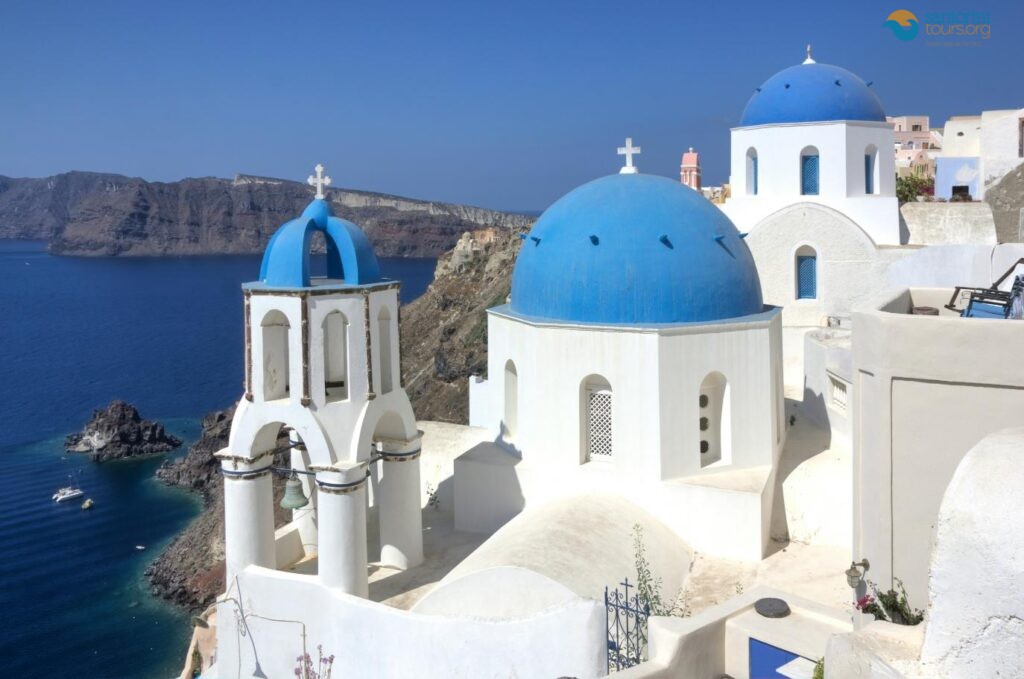
But Greece isn’t a museum. That’s what surprises first-timers most. The whitewashed villages of the Cyclades feel effortlessly alive, with bougainvillea spilling over blue-domed churches and locals grilling octopus on the waterfront. The food alone, fresh feta, grilled lamb, olive oil pressed from trees older than some countries, is reason enough to book a flight.
And then there’s the geography. Over 6,000 islands and islets (roughly 230 of them inhabited), volcanic coastlines, mountain gorges, and beaches that range from black sand to pink. Few destinations blend antiquity with natural beauty this seamlessly. That combination is exactly why Greece tours remain among the most popular in Europe year after year, and why we’ve built My Greece Tours around helping travelers experience it all firsthand.
Types of Greece Tours for Every Kind of Traveler
Not every traveler wants the same trip, and Greece is generous enough to accommodate almost any style. Here’s a breakdown of the two most popular categories we see.
Guided Cultural and Historical Tours
If you’re drawn to ruins, myths, and the deep story behind every stone, a guided cultural tour is your best bet. These itineraries typically run 7 to 16 days and focus on mainland landmarks: Athens and the Acropolis, the ancient theater at Epidaurus, the mountaintop monasteries of Meteora near Kalambaka, the oracle sanctuary at Delphi, and the Lion Gate at Mycenae.
Packages often start around $999 for land-only options, which makes them surprisingly accessible. What really sets a guided tour apart, though, is the expertise. Having a knowledgeable local guide, someone who can explain why the columns on the Parthenon lean slightly inward or what actually happened at Thermopylae, transforms sightseeing into genuine understanding. We’ve toured Olympia, the birthplace of the Olympic Games, more times than we can count, and we still learn something new when a great guide is leading the way.
These tours typically include hotel accommodations, many meals, and ground transportation, so you’re not burning energy on logistics.
See more:
- Chios
- Corfu Tours: Private Tours in Corfu, Walking Tours, Corfu Tour Guide & Guides
- Crete Travel Guide: Experience Crete, Greece – The Island Local Guide From a Local
- Delos
- Ephesus Tours: Explore Ancient Ephesus Adventures with Ephesus Tour Packages
- Epidaurus Day Tour – Self-Guided Epidaurus Tours to Ancient Epidaurus
- Explore Delphi, Greece: Ultimate Guide to the Archaeological Site of Delphi
- Folegandros
Island-Hopping Adventures
Island-hopping is, for many travelers, the quintessential Greece experience. The format is simple: you move between islands by ferry or small cruise ship, spending a night or two on each before continuing to the next. Classic routes hit Santorini, Mykonos, Crete, Naxos, and Paros, though Ionian islands like Corfu and Lefkada have their own devoted following.
Trips range from 8 to 16 days and vary wildly in price depending on the level of luxury. A well-known itinerary like Classic Greece with Mykonos and Santorini runs around $3,799, while budget-friendly versions cut costs by using public ferries and mid-range hotels.
What we love about island-hopping is the contrast. Santorini’s dramatic caldera views feel nothing like the Venetian harbor of Chania in Crete, and Naxos’s agricultural interior is a world away from Mykonos’s party-driven energy. Every island has a personality, and hopping between them is the best way to feel it.
Top Destinations Every Greece Tour Should Include
Greece has hundreds of worthwhile stops, but certain destinations belong on every itinerary. Here are the ones we consider non-negotiable.
Athens and the Ancient Mainland
Athens is where most Greece tours begin, and for good reason. The Acropolis dominates the skyline, and honestly, no photo prepares you for seeing it in person for the first time. Below it, the Acropolis Museum houses artifacts that put the ruins into vivid context, including the original Caryatid statues.
Beyond Athens, the mainland delivers some of Greece’s most powerful sites. Delphi, perched on the slopes of Mount Parnassus, was considered the center of the world by the ancient Greeks. Mycenae, with its massive stone walls, gives you a sense of the Bronze Age civilization that preceded classical Greece. And the pass at Thermopylae, where 300 Spartans held off the Persian army, still carries an eerie weight when you stand there.
We also recommend Meteora, where Byzantine monasteries sit atop towering rock pillars. It’s one of those places that looks photoshopped until you’re actually standing beneath it. Corinth, Mystras in the Peloponnese, and the coastal region of Messinia round out a mainland tour nicely.
Santorini, Crete, and the Greek Islands
Santorini needs no introduction, its caldera sunsets are probably the most photographed scene in all of Greece. But Santorini is more than the view from Oia. Wine tours through the island’s volcanic vineyards, hikes along the caldera trail from Fira to Oia, and boat trips to the volcanic hot springs all add depth to a visit.
Crete, the largest Greek island, could fill an entire vacation on its own. Heraklion is home to the Palace of Knossos, the legendary seat of King Minos and the Minotaur’s labyrinth. The western city of Chania has one of the prettiest old towns in the Mediterranean, and the Samariá Gorge offers a full-day hike through dramatic scenery.
Don’t overlook smaller islands, either. Paros has gorgeous beaches without Mykonos-level crowds. Naxos is a hiker’s paradise with Venetian towers dotting its hillsides. And our founder’s home island of Milos, with its lunar-like rock formations at Kleftiko, remains one of Greece’s best-kept secrets. Aegean and Ionian itineraries each have their own character, and a good Greece tour will help you decide which fits your mood.
What to Expect on a Guided Greece Tour
If you’ve never joined a guided tour before, here’s what a typical Greece experience looks like.
Most group tours run between 9 and 15 days. You’ll travel with a group, sizes vary from intimate pods of 10–12 people to larger groups of 30 or more, and you’ll have an expert guide with you throughout. That guide handles the narration at historical sites, coordinates logistics like ferry transfers and hotel check-ins, and often shares personal stories that make the trip feel less like a package and more like traveling with a well-connected friend.
Accommodations are usually 3- to 4-star hotels, centrally located so you can explore on your own during free time. Most tours include breakfast daily and several group dinners, often at restaurants that wouldn’t show up on a quick Google search. Ferries and internal flights between islands are typically arranged for you.
We see a lot of travelers over 60 on guided Greece tours, and the format works beautifully for that demographic, no dragging suitcases through metro stations or deciphering Greek bus schedules. But younger travelers enjoy them too, especially first-timers who want to maximize their time without spending weeks researching logistics.
Tour styles range from value-oriented (covering the essentials at a lower price point) to classic packages with more included meals and excursions, to small-group tours that prioritize flexibility and personal attention. Expect to visit ancient ruins that genuinely change how you think about history, swim in water so clear it looks fake, and eat food that will ruin you for Greek restaurants back home. That’s not hyperbole, it’s just what Greece does.
Best Time of Year to Tour Greece
Timing matters more than most travelers realize. Greece’s peak season runs from May through September, and there’s a reason: the weather is reliably warm and sunny, ferry schedules are at their fullest, and every island is wide open for business. If your Greece tour includes island-hopping, summer is the safest bet because inter-island connections are frequent and reliable.
That said, peak season also means peak crowds. Santorini in July and August can feel shoulder-to-shoulder in certain spots, and hotel prices climb accordingly. We’ve found that late May, June, and September hit the sweet spot, warm enough to swim, uncrowded enough to actually enjoy the sites, and priced more reasonably than the dead-of-summer months.
Off-peak travel (October through April) has its own appeal. Athens, Delphi, and the mainland sites are perfectly enjoyable in mild autumn or spring weather, and you’ll practically have Meteora to yourself. Crete stays relatively warm into November. The trade-off is that smaller islands scale back services, some restaurants and hotels close for winter, and ferry routes shrink.
Our recommendation? If it’s your first Greece tour, aim for late May to mid-June or September. You’ll get the best blend of weather, access, and value. Shoulder season is the insider’s move, and it’s what we almost always suggest to travelers booking through My Greece Tours.
How to Choose the Right Greece Tour for Your Travel Style
With so many Greece tours on the market, narrowing it down can feel overwhelming. Here’s how we’d approach it.
Start with your priorities. Are you a history buff who wants to stand where Socrates taught, or are you chasing sunsets and swimming holes? Cultural tours that focus on Athens, Delphi, and the Peloponnese are ideal for the former. Island-centric itineraries through Santorini, Naxos, and Paros suit the latter. And plenty of hybrid tours combine both.
Consider the pace. Some travelers want every day packed with excursions. Others need built-in free time to wander a village or sit at a taverna for three hours. Value-oriented tours like an “Essential Greece” package cover the highlights efficiently, while small-group tours through Southern Greece or the lesser-known islands tend to move at a more relaxed rhythm.
Think about group size. Large group tours are budget-friendly and social, but they sacrifice flexibility. Small-group tours (usually under 16 people) cost more but offer a more personal experience, closer access to your guide, better restaurant choices, and the ability to linger at a site when the moment calls for it.
Factor in duration. Seven-day tours work well if you’re focused on either the mainland or the islands, but not both. For a combined mainland-and-islands experience, plan on 10 to 14 days minimum. Sixteen-day itineraries exist for travelers who want the full sweep.
Match activity level. Walking and hiking tours through Naxos, Santorini’s caldera trail, or the Samariá Gorge in Crete are fantastic for active travelers. Cruise-based Aegean tours, on the other hand, keep physical demands low while covering a lot of ground, or water, rather.
Eventually, the right Greece tour is the one that matches how you actually travel, not how you think you should. We’ve helped hundreds of travelers sort through exactly this decision at My Greece Tours, and the best advice we can give is simple: be honest about what you want, and the right itinerary will find you.
Greece has a way of exceeding expectations no matter which route you take. Whether you’re exploring the mainland’s ancient ruins, hopping between sun-drenched islands, or doing a bit of both, this is a country that rewards every kind of curiosity. The hardest part isn’t choosing a tour, it’s coming home afterward and not immediately booking your next one. We speak from experience.
Key Takeaways
- Greece tours in 2026 offer diverse options including guided cultural deep-dives, island-hopping adventures, and small-group walking tours tailored to every travel style.
- Top mainland destinations like Athens, Delphi, Meteora, and Mycenae showcase the cradle of Western civilization and provide profound historical understanding with expert local guides.
- Island-hopping through Santorini, Crete, Naxos, and lesser-known gems like Milos combines dramatic natural beauty with distinct island personalities and authentic Mediterranean experiences.
- Late May through June and September represent the ideal time to tour Greece, balancing warm weather, manageable crowds, and better pricing than peak summer months.
- Choosing the right Greece tour depends on your priorities—prioritize history or beaches, consider group size and pace preferences, and match the itinerary duration to your travel goals.
- Guided Greece tours typically include 3- to 4-star hotel accommodations, daily breakfasts, select group dinners, and coordinated logistics, making them ideal for first-timers and travelers seeking hassle-free exploration.
Frequently Asked Questions About Greece Tours
What are the best types of Greece tours for first-time visitors?
Greece tours come in two main categories: guided cultural tours (7–16 days focusing on Athens, Delphi, and Olympia starting at $999) and island-hopping adventures (8–16 days through Santorini, Crete, and the Cyclades). First-timers often prefer hybrid tours combining both mainland history and island experiences, which require 10–14 days minimum.
How long should a Greece tour be to see both islands and mainland sites?
A combined mainland-and-islands Greece tour requires at least 10–14 days to experience Athens, Delphi, and ancient sites while visiting multiple islands like Santorini, Crete, and Naxos. Seven-day tours work if you focus on either islands or mainland exclusively.
What is the best time of year to take a Greece tour?
Late May through mid-June and September offer the ideal balance: warm weather for swimming, full ferry schedules for island-hopping, uncrowded sites, and better pricing than July–August. Off-season (October–April) provides solitude on mainland sites but reduced services on smaller islands.
What should I expect on a guided Greece tour?
Expect 9–15 day group tours with expert local guides, 3–4 star centrally-located hotels, daily breakfast and group dinners, and arranged ferries or internal flights. Groups range from 10–30 people, making it ideal for first-timers and travelers 60+ who want logistics handled without stress.
Why is Greece considered one of Europe’s top tour destinations?
Greece uniquely blends Western civilization’s cradle—including the Acropolis, Delphi, and Olympia—with stunning natural beauty: over 6,000 islands, volcanic coastlines, and Mediterranean cuisine. No other European destination packs ancient history, vibrant island culture, and breathtaking landscapes into one trip.
How do I choose between a large group tour and a small-group Greece tour?
Large group tours (20–30+ people) are budget-friendly and social but offer less flexibility. Small-group tours (under 16 people) cost more but provide personalized attention, better restaurant access, and the ability to linger at sites. Match your preference for pace, intimacy, and cost to choose the right fit.